
01中文原文Original Chinese
城阙辅三秦,风烟望五津。
与君离别意,同是宦游人。
海内存知己,天涯若比邻。
无为在歧路,儿女共沾巾。
02拼音Pinyin
拼音采用现代普通话读音。/ Modern Mandarin pronunciation.
03英文翻译English Translation
The city walls stand guarded by the lands of Qin; through wind and mist, I look toward the five river crossings.
We share the feeling of farewell, both travellers far from home in service.
True friends remain close, even across distant horizons.
Here where our roads divide, let us not weep together like children at parting.
本站原创英文意译 / An original interpretive translation for this edition.
04文化解读Cultural Insight
“知己”不只是熟识的人,更是理解自己心意的人。诗人没有否认离别的难过,而是用精神上的亲近,回应地理上的遥远。
Zhījǐ is someone who truly understands you. This farewell poem acknowledges separation, then answers physical distance with emotional closeness. The five river crossings evoke the region of Shu, the friend’s destination.
05书法Calligraphy
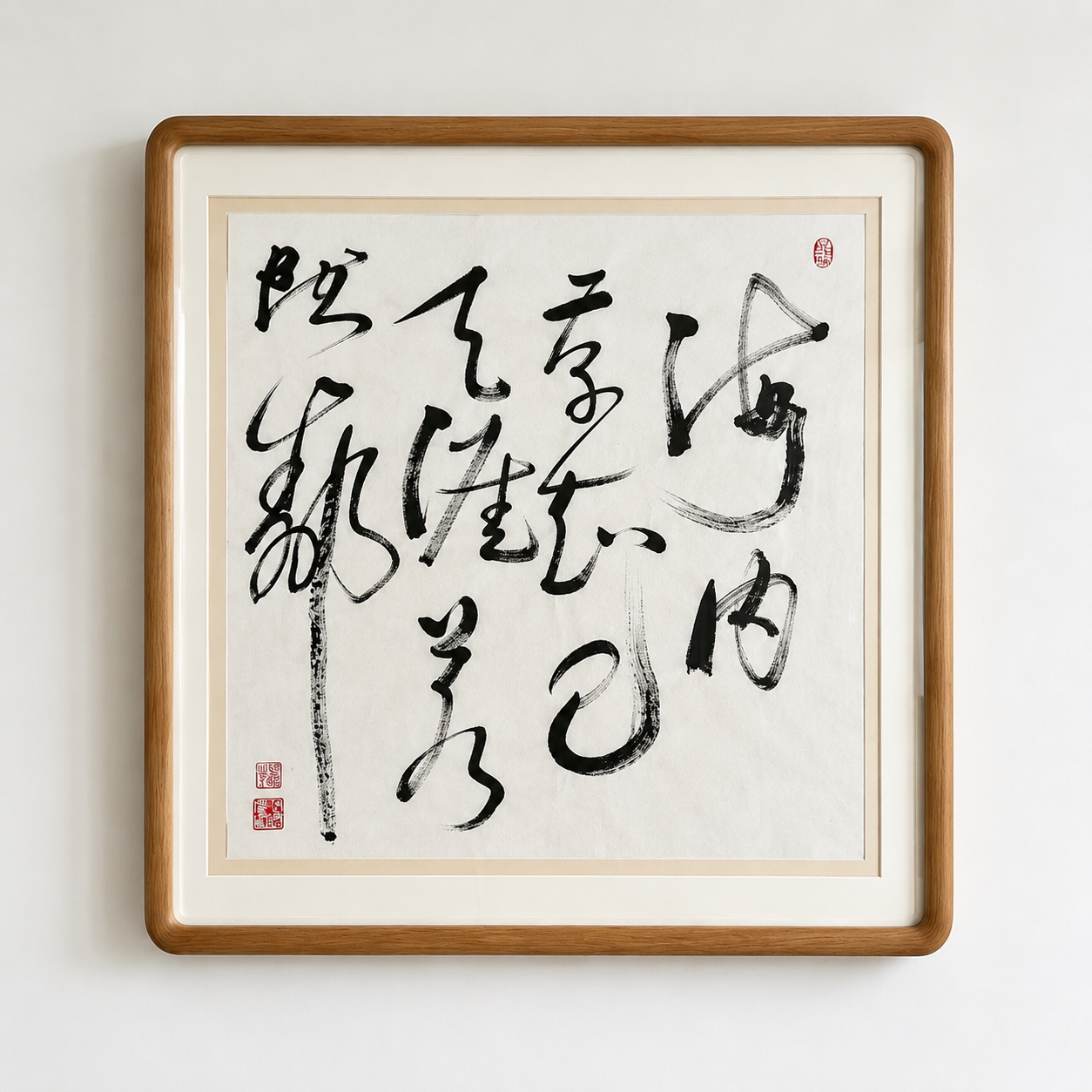
Calligraphy by Huangui Nie
书法:聂还贵
“知己”连接着这首送别诗,也连接着知己文化传媒的名字。
Zhiji, a friend who understands your heart, connects this poem with the name of Zhiji Culture Media.
聂还贵书法 / Explore the collection ↗06关于王勃About Wang Bo
王勃,字子安,初唐诗人,与杨炯、卢照邻、骆宾王并称“初唐四杰”。他的诗文将个人情感与开阔景象相连;友情、远行与人生际遇,是走近他作品的几条线索。
Wang Bo, courtesy name Zi’an, was a poet of the early Tang dynasty and one of the Four Paragons of the Early Tang, alongside Yang Jiong, Lu Zhaolin and Luo Binwang. His poetry connects intimate feeling with expansive landscapes.
走近王勃 / Meet Wang Bo ↗原文参考:维基文库 · 送杜少府之任蜀州。古诗为公有领域作品;本页采用简体通行写法,异文未逐一列出。